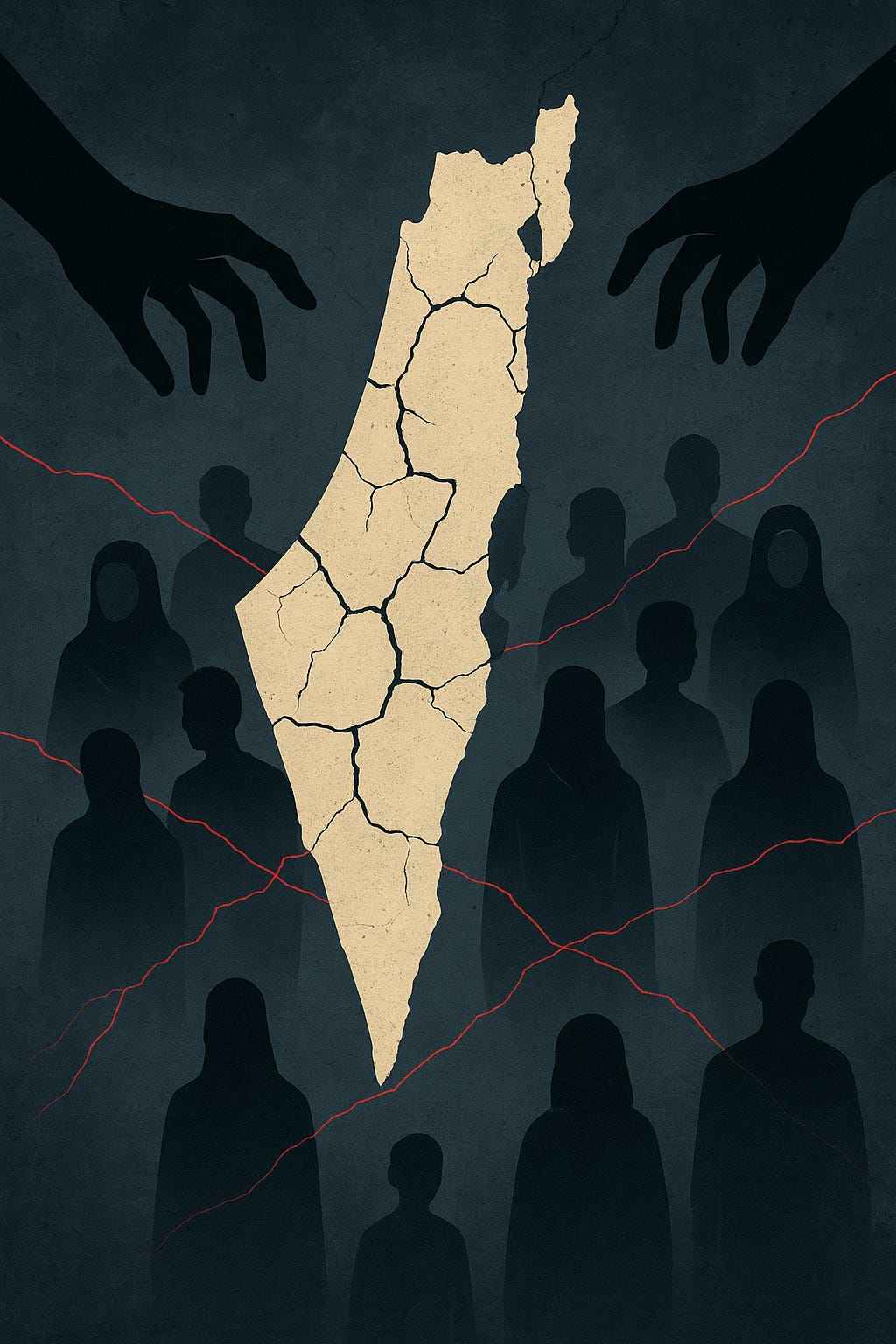
Wars are not always fought with tanks and missiles. Some wars are waged in whispers, memes, and half-truths — in the subtle erosion of trust between neighbors, colleagues, even family members. This form of conflict has no front lines. It seeps into living rooms and comment sections. It is a siege of the mind, and its most potent weapon is division.
The method is neither new nor uniquely aimed at Israel. For decades, authoritarian regimes have understood the value of turning the openness of a free society against itself. Find the fracture lines — class, ethnicity, religion, ideology — and press on them. Fund activists, deploy trolls, manufacture outrage. Feed the flames until disagreement becomes distrust, distrust becomes hatred, and hatred becomes the undoing of the social fabric.
The KGB perfected this technique during the Cold War, deliberately inflaming racial and ideological disputes in the US and the West to undermine confidence in their institutions. Even today, such attacks persist, evident in movements like Antifa, Black Lives Matter, the anti-Trump protests, and the growing anti-Israel and even anti-America campaigns within the US itself.
Israel, perhaps more than any other modern democracy, offers fertile ground for this strategy. Our openness is our strength, but it also means that our internal debates are conducted in the full glare of the world’s stage, often amplified by actors who wish us harm. The “weak points” in our society are no secret — and our enemies know them well.
They exploit every imaginable division:
Ethno-cultural: Ashkenazi vs. Mizrahi vs. Sephardi vs. Ethiopian Jews; Jewish vs. Arab citizens; Arab Muslims vs. Arab Christians vs. Druze vs. Bedouin.
Religious: Haredi vs. Religious Zionist vs. Masorti vs. secular; converts vs. born Jews; Halachic vs. non-Halachic Jews vs. non-Jews.
Political: pro– vs. anti–Netanyahu; left vs. right; pro– vs. anti–judicial reform; settlement supporters vs. opponents.
National identity: Israeli-born vs. olim; veterans vs. new immigrants; Israel-first vs. diaspora-first loyalties.
Geographic: center vs. periphery; Tel Aviv vs. Jerusalem; Israel proper vs. Judea and Samaria.
Socioeconomic: high-tech elites vs. struggling periphery towns; upwardly mobile vs. economically stagnant sectors.
Civil infrastructure: disparities in access to and quality of public services among Jewish, Arab, and other minority communities.
Generational: pre-state founders vs. post-’67 generations vs. Gen Z.
Language and culture: Hebrew vs. Arabic vs. Russian vs. Amharic.
Micro-divisions: marriage laws, army service exemptions, prayer rights at the Kotel, state funding for religion, local municipal rivalries.
Each of these is a ready-made pressure point.
The strategy is consistent: identify a natural difference, inflate it into an injury, nurture that injury until it festers into open hostility. In this way, the adversary avoids confronting Israel’s military strength directly. Instead, they aim to make us defeat ourselves.
The campaign often operates invisibly. Troll farms masquerade as concerned citizens. False-flag social media accounts claim to represent “the oppressed group” in each division. Some of these voices are genuine but manipulated; others are pure fabrications. The goal is not persuasion in the traditional sense — it is to make each side feel that the other is irredeemable.
The Troll Factor: Weaponizing Identity from Afar
A striking paradox in the information warfare surrounding Israel is the origin of many of the most aggressive propagandists. Surprisingly, the largest group of trolls pushing divisive anti-Zionist narratives are often leftist Europeans with no genuine connection to Jewish identity, Israel, or the Middle East. These actors accuse Zionists of being European colonizers and white supremacists, even though they themselves have no stake or authentic link to the region or its peoples.
The second largest contingent masquerades as “progressive” diaspora Jews hostile to Israel. Some claim deep engagement with Jewish tradition—studying Torah, practicing Judaism—while simultaneously condemning Zionism as fundamentally anti-Jewish. Yet, based on linguistic cues, argumentative patterns, and inconsistencies in their writings, it is evident that many of these are trolls feigning Jewish identity rather than genuine voices from within the community.
On the Frontlines of the Narrative War
The division narratives discussed here are not abstract theories. They are the accusations, comparisons, and fault lines I have personally encountered—again and again—on social media, in comment threads, and in direct responses to my articles. These are the pressure points online agitators and propagandists most often exploit, dressing them up as moral arguments while using them to fracture Israeli society.
Let us now explore several of the key division narratives that illustrate this strategy in action.
Mizrahi vs. Ashkenazi Jews
One favored vector of division in recent years is the pitting of Mizrahi Jews against Ashkenazi Jews. In this narrative, Mizrahi and Sephardic Jews are recast as “Arab Jews,” a term chosen not as a benign descriptor but as a political weapon. By framing them as “Arabs” first and “Jews” second, the story attempts to detach them from the Jewish national story and attach them to a broader Arab identity — a prelude to folding them into an anti-Zionist cause.
The antagonists in this narrative are the so-called “European colonizers,” portrayed not merely as Ashkenazi Jews but as foreign impostors with no authentic connection to Judaism. The claim goes further: these “colonizers” allegedly lured Mizrahi Jews to Israel under false pretenses, subjected them to systemic abuse, and stripped them of dignity. This tale often escalates to accusations of stolen children, forced medical procedures, and deliberate social subjugation.
As with all manufactured divisions, the goal is not truth but fracture. In the most extreme versions, the narrative culminates in fantasies of a post-Israel reckoning — where Jews of European descent are “returned” to Europe or punished, while “Arab Jews” remain as the sole “authentic” Jewish remnant.
Paradoxically, some versions complicate this by labeling Sephardic Jews as European—after all, “Sephardic” derives from Sepharad, the biblical name for Spain, which is in Europe. This means that even when “Arab Jews” are told they will be allowed to “stay” after Israel’s demise, that claim can easily be flipped, since they too can be categorized as “European.”
It is a chilling example of how identity politics, once weaponized, ceases to be about justice and becomes about erasure.
Israeli Jews vs. “Progressive” Diaspora Jews
A growing fault line exists not along ethnicity but across geography and ideology — between Israeli Jews and certain segments of the “Progressive” Jewish diaspora. The narrative here is deceptively simple: Zionism, it claims, is not only a political mistake but an assault on Jewish ethics and even Judaism itself. Israel, by defining itself as the nation-state of the Jewish people, is accused of arrogating the right to speak for all Jews, thereby implicating Jews worldwide in its policies.
From this framing, the conclusion follows: the best way for diaspora Jews to protect themselves is to disavow Israel entirely. In the most extreme expressions, these Jews not only distance themselves from Israel but actively align with anti-Israel campaigns, convinced that doing so is an act of moral courage and self-preservation. The wedge is driven deeper by hostile actors who applaud this estrangement, knowing that a Jewish people divided between homeland and diaspora becomes easier to marginalize on both fronts.
Halachic Jews vs. non-Halachic Jews or non-Jews
Another division narrative draws its power from religious definitions, though its proponents often oversimplify or misunderstand the concepts entirely. They speak of “first-class Jews” versus “second-class Jews,” framing Halachic Jews — those recognized as Jewish according to traditional Jewish law — as the privileged, and everyone else, including non-Halachic Jews and non-Jews, as second-tier citizens.
This narrative often leans on the claim that Israel does not recognize “inter-racial” marriages between these groups, presenting it as a form of institutionalized discrimination. What it leaves out is key: Israel does not have civil marriage within its borders for anyone — all marriages are conducted through recognized religious authorities. Yet Israel does recognize all marriages performed abroad, including same-sex marriages and unions between Jews and non-Jews.
In fact, even many secular Halachic Jews — who could marry through a rabbinical court — prefer to bypass it entirely and have a quick civil ceremony abroad, avoiding religious bureaucracy altogether. The omission of these facts is not accidental; it is designed to cast Israel’s marriage policy as an intentional weapon of exclusion, rather than the result of a complex historical arrangement inherited from Ottoman and British rule.
Israeli Arabs vs. non-Israeli Arabs
This division flips the usual approach on its head. Instead of separating groups, it fuses them — by calling all Arabs “Palestinians.” On the surface, it may seem like an inclusive term, but its real purpose is to reframe Israeli Arabs as foreigners — “Palestinians” who just happen to hold Israeli citizenship.
The evolution of the term “Palestinian” reveals its political utility. Initially coined as an Arab national identity in the 1960s, it referred solely to non-Israeli Muslim Arabs living in territories under dispute.
Over time, it expanded to include Christian Arabs, then Israeli Arabs themselves. Today, in some Ziophobic narratives, “Palestinian” means anyone who is not Jewish. The implication is that Jews alone are “Israelis,” while everyone else belongs to a separate national identity.
If the trend continues, the label could even be extended to Mizrahi and Sephardic Jews — recast once again as “Arab Jews” and therefore “Palestinians.” In that framing, “Israelis” would be reduced to only one group: the so-called European “Zionist colonizers.” It is a linguistic trap designed not to unite Arabs, but to redefine and isolate Jews as the perpetual outsiders in their own state.
Civil Infrastructure and Division Narratives
When four members of an Arab Israeli family were killed during a missile attack from Iran on Tamra, northern Israel, on June 14, 2025, a division narrative quickly emerged. Social media accounts and commentators claimed that Israel deliberately withholds investment in missile shelters for Arab towns and villages—unlike in Jewish cities such as Tel Aviv. Some went further, alleging that Israel does not protect Arab communities with its missile defense systems in the same way it defends Jewish ones.
Similar accusations arose after a Hezbollah rocket attack on July 27, 2024, which killed twelve Druze children and injured 42 more in Majdal Shams in the Golan Heights. The Druze are a distinct ethnic and religious community, separate from Arab populations, yet the same narrative of deliberate discrimination was applied. In both cases, the tragedy of civilian deaths was immediately reframed into a narrative of division, seeking to pit different communities against each other rather than focus on the true source of the attacks.
Everyone vs. Everyone
Some narratives go further still, painting Israel as nothing less than a rigid “racial caste system.” In this framing, the hierarchy is absolute and all-encompassing. At the top are the so-called “white supremacist European Zionists” — often defined as Ashkenazi Halachic Jews, who in other conspiracies are paradoxically accused of not being “real Jews” at all. Beneath them are European non-Halachic Jews and even European non-Jews, supposedly enjoying more rights than others.
Next in the alleged hierarchy come the Sephardic and Mizrahi Jews — redefined once again as “Arab Jews” to suggest they are somehow separate from or subordinate to the “real” power holders. Beyond the Jewish groups, the caste ladder continues into Israel’s Arab and other non-Jewish populations: Druze are claimed to be treated better than other minorities, followed by Christian Arabs, then Bedouins. At the very bottom of this imagined pyramid are Muslim Arabs, and beneath even them, the most “oppressed” — non-Israeli Arabs in Judea, Samaria, and Gaza. These last groups are not Israeli citizens at all and are governed by their own authorities, yet the comparison to citizens is deliberately drawn to inflame resentment.
This “everyone vs. everyone” model is an especially destructive fiction because it does not simply pit two groups against each other — it demands that every person see themselves as either above or below someone else. It erases the complexities of Israeli society and replaces them with a single toxic lens: a belief that all relationships are defined by oppression and hierarchy, and that coexistence is impossible.
The Philosophy of Division
The genius — and the danger — of weaponized division is that it works with the raw materials already present. It does not need to invent our differences; it only needs to distort their meaning. Every family, every community, contains disagreements. But in a healthy society, these tensions are absorbed, negotiated, and balanced. In an unhealthy one — or one under sustained external agitation — they become identities in themselves, and those identities become walls.
A society that distrusts itself cannot mobilize effectively, cannot coordinate in crisis, cannot make the sacrifices that survival sometimes demands. A people divided into suspicious tribes becomes a chessboard of isolated pawns, each too busy guarding its own square to notice the board tipping.
Beyond the Arguments
Over time, I have written several articles, posts, and social media pieces debunking many of these division narratives—such as Debunking the ‘Apartheid’ Myth and others exposing the distortions behind common anti-Israel accusations.
Yet I have come to realize that Ziophobes don’t truly engage with arguments or evidence. They are not interested in debate or truth. Instead, they generate an endless stream of alleged fractures and divisions—no matter how random or minor—and then methodically widen those cracks into deep rifts.
This is not a search for justice or clarity; it is a deliberate information war based on lies and manufactured conflict. Our task is not to endlessly refute every claim, but to recognize this tactic for what it is—and refuse to fall into the trap of division.
Countermeasures
The most important defense against such tactics is not surveillance or censorship—though security measures matter—but societal resilience. A people confident in their shared story is harder to divide. This means:
Strengthening civic education so that every citizen understands both the complexity and the unity of Israel’s history.
Encouraging public discourse that acknowledges differences without framing them as zero-sum.
Calling out external interference campaigns when they occur, so citizens can recognize manipulation when they see it.
Building cross-community initiatives that bring together groups too often spoken about but rarely spoken with.
Engaging constructively with supportive elements in the Jewish diaspora and global community, while prioritizing unity and resilience within Israel itself.
Summary
These steps are vital, but they are part of a larger challenge. Israel’s enemies seek to turn our differences into fault lines, hoping to fracture our society from within. Our true strength lies in refusing to let others define those divisions for us—especially those who wish to see us fall.
The siege on Israel is not always loud. Sometimes it is silent, subtle, and slow. But if we recognize the pattern, we can resist it. And if we resist it together, the cracks in our society will not be our downfall—they will be the seams that hold us more firmly.
Addressing the Scope: Why Focus on Israeli Society?
Critics may ask why this discussion centers on Israeli citizens within Israel’s sovereign borders and not on Arab settlers in Judea, Samaria, or Gaza. This is a valid question, and it touches on a fundamental aspect of the ongoing conflict.
As I argue in my article The Palestine Paradox Ends Here, the only sustainable path forward is a regional solution in which non-Israeli Arab settlers are absorbed into the broader Arab world—where they belong culturally, historically, and politically. Israel’s sovereignty must remain firmly rooted in its citizens and secure borders.
The status and future of these territories are indeed important, but they lie outside the core democratic society of Israel proper. The non-Israeli Arab population is not part of Israel’s citizenry and belongs to a separate regional context that must be addressed in cooperation with the Arab world.
A just and lasting peace also requires dismantling UNRWA, which perpetuates the refugee condition instead of resolving it, thereby maintaining a cycle of conflict and division.
Focusing on unity and resilience within Israel’s sovereign borders is essential to securing a stable future. It is the foundation upon which any broader regional peace must be built.